
by Madeleine Coyle, KAB Copywriter (Volunteer)
Waste & Climate Change - the “Nearly Forgotten Nexus”
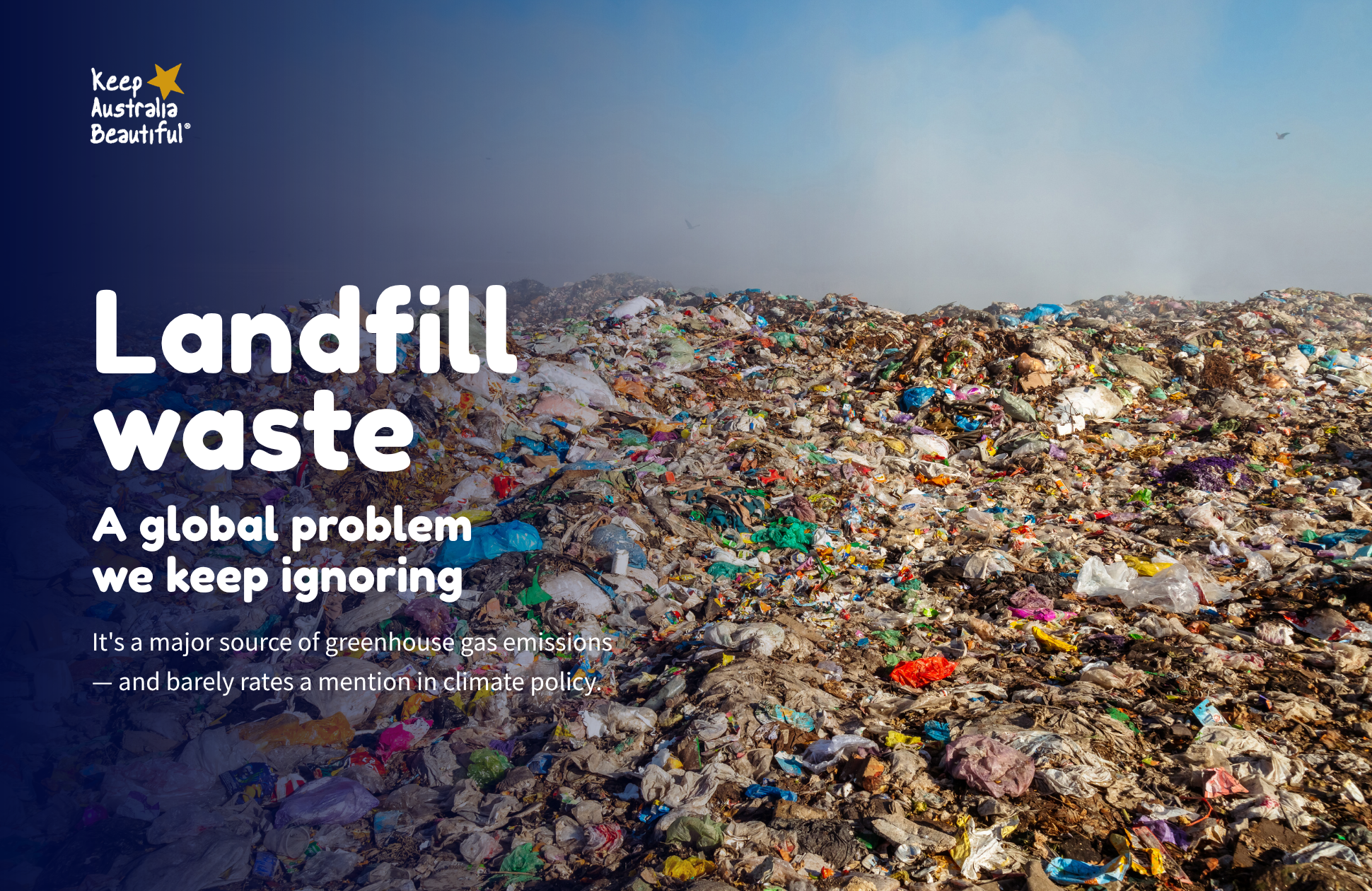
We have a global waste problem, folks—a mammoth, incontrovertible waste problem on an epic scale.
And this waste problem is deeply interconnected with climate change, primarily through the emissions of greenhouse gases (GHGs). However, this connection is often overlooked or ignored by policymakers, the general public, and corporate sectors.
The waste sector is a significant contributor to human-driven methane emissions—contributing 20 per cent of emissions, alongside fossil fuels (35 per cent) and agriculture (40 per cent)1. Reducing human-driven emissions is a cost-effective way to reduce the rate of global warming1, and yet Australia is still one of the world’s leading contributors to greenhouse gas emissions2.
If we are to achieve net-zero in line with the Paris Climate Change Agreement’s emissions goal by 2050 then a lot of socks need to be pulled up. ASAP!
So, let’s try to unpack the complex and messy issue: from our major waste problem and how landfill sites are a playground for greenhouse gas production, to what individuals, governments and corporations can do as part of collective action.
– United Nations Environment Programme (2024:9)
It’s A Global Mess!
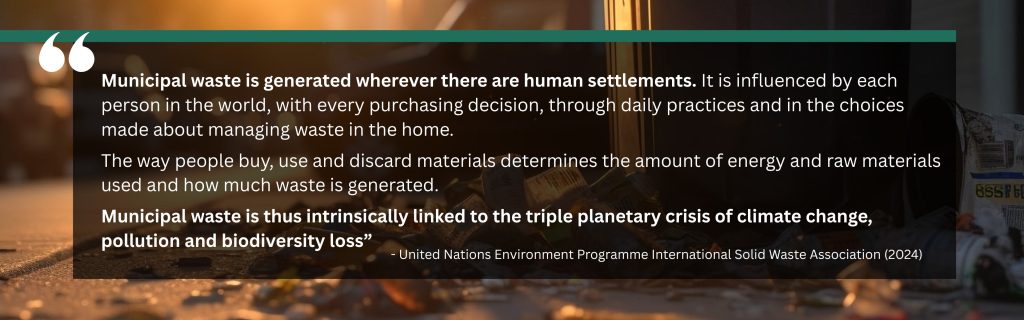
It’s no breaking news that we have a major waste problem. Globally, more than two billion tonnes of municipal solid waste is generated every single year³ (municipal waste being ‘rubbish’ or ‘garbage’ generated by urban residents in their daily lives, including residential, commercial and industrial waste).
Let’s read that again: Globally, more than two billion tonnes of municipal solid waste is generated. Every. Single. Year.
If we packed all that waste into shipping containers (gross…but stay with us!) and placed them end-to-end, this packed waste would wrap around our planet’s equator 25 times³. This amount is expected to increase by 73 per cent by 2050, according to the World Bank⁵. In Australia, we generated 75.6 metric tonnes of waste in 2022-2023. That is about 2.88 tonnes per person⁶. Which is… a lot.
“So, what on earth are we throwing away?”
Well, a lot.
Firstly, let’s look at our municipal waste; that is, the everyday solids we discard, such as organic/food waste, paper and cardboard, plastics, glass, metals, textiles, organic/garden waste, hazardous household waste, and more⁷. As well as our municipal waste, human activities produce an immense amount of agricultural; construction and demolition; industrial and commercial; and healthcare waste. This includes waste produced on farms, building sites, and in factories and hospitals³.
“OK, so how much of this waste goes to landfill?”
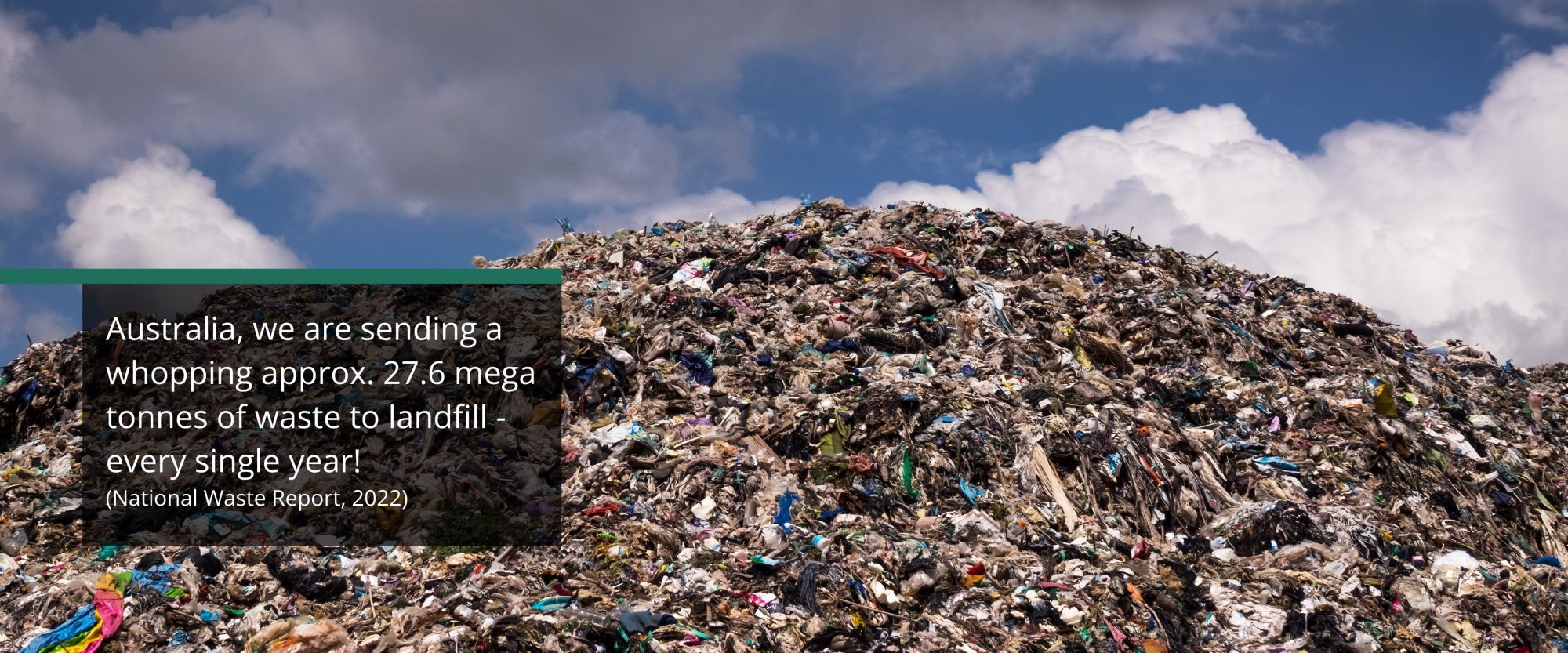
If we throw something into general waste bins, the destination is unsurprising: landfill. According to the National Waste Report (2022)⁸, which is produced every two years, approximately 27.6 mega tonnes of waste produced was sent to landfill.
So, again, a lot.
“Alright, and then what happens to it?”
Once waste is out of sight, it tends to be out of mind. We diligently separate our household waste and recycling, dispose of it responsibly and, well, hope for the best! We hope that most of it will be rescued, and that it won’t need to travel far to be recycled. If we are in a developed state, we may feel assured that our advanced waste management systems will “do the right thing”, and that waste management professionals have things in hand⁹. They know what they are doing… right? Right?
Unfortunately, these assumptions would be largely incorrect. More on that later!
What Are Greenhouse Gases & How Do They Contribute To Climate Change?
First, let’s do a quick breakdown of greenhouse gases (GHGs). Greenhouse gases—primarily methane (CH4), carbon dioxide (CO2), nitrous oxide, and fluorinated gases—trap heat from the sun in the atmosphere, causing the greenhouse effect. The greenhouse effect is a natural process that keeps the sun’s heat from escaping the Earth’s atmosphere and is essential for sustaining life on our planet. Think of these gases as a blanket wrapped around Earth, keeping it warm.
However, if too much of the sun’s energy is trapped near the surface of Earth, a warming effect is created.
This is what many call global warming.
As our planet gets warmer, our climate changes—causing weather pattern changes, rising sea levels and ocean acidification. These events are already happening on a mass, global scale.
Many greenhouse gases occur naturally. However, human activity has accelerated GHG emissions and has caused a build-up in Earth’s atmosphere.
Landfill Emissions: The Methane Problem
Landfills, the oldest and most common form of waste disposal, offer a convenient method for dumping waste. These days, landfill sites are “more sophisticated and designed and operated under strict government regulations”⁴; however, “such compliance regimes are limited to more developed countries, and in most countries where rapid urban population growth is the norm, landfills have been and are still virtual dumping grounds for waste rather than well-engineered waste disposal sites”⁴.
Increasing attention has turned towards the greenhouse gases that these sites produce, and how much they contribute to the rapid heating of our planet.
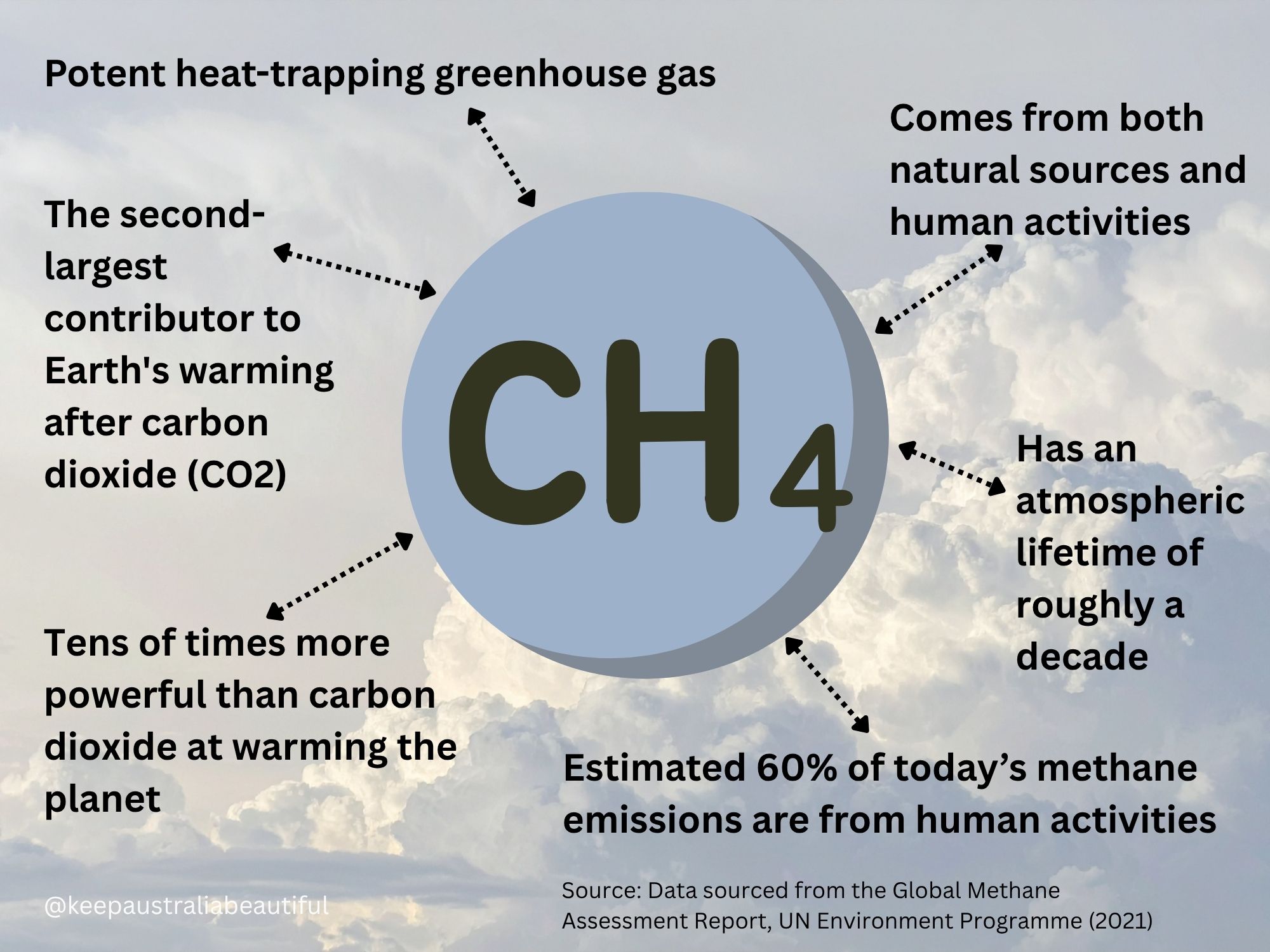
As waste breaks down in a landfill, it produces gas—mostly methane and carbon dioxide (about 99%), as well as trace components such as hydrogen sulfide¹². This occurs through a natural decomposition process of organic waste, primarily under oxygen-free conditions. Though they are produced in similar quantities, methane is a more potent greenhouse gas that is significantly more effective at trapping heat in the atmosphere than carbon dioxide.
“If I’m throwing my food scraps in the bin, surely it just breaks down in landfill…?”
Landfills are essentially giant holes in the ground, so it may lead us to believe that food waste will simply break down over time.
Unfortunately, no—sorry!
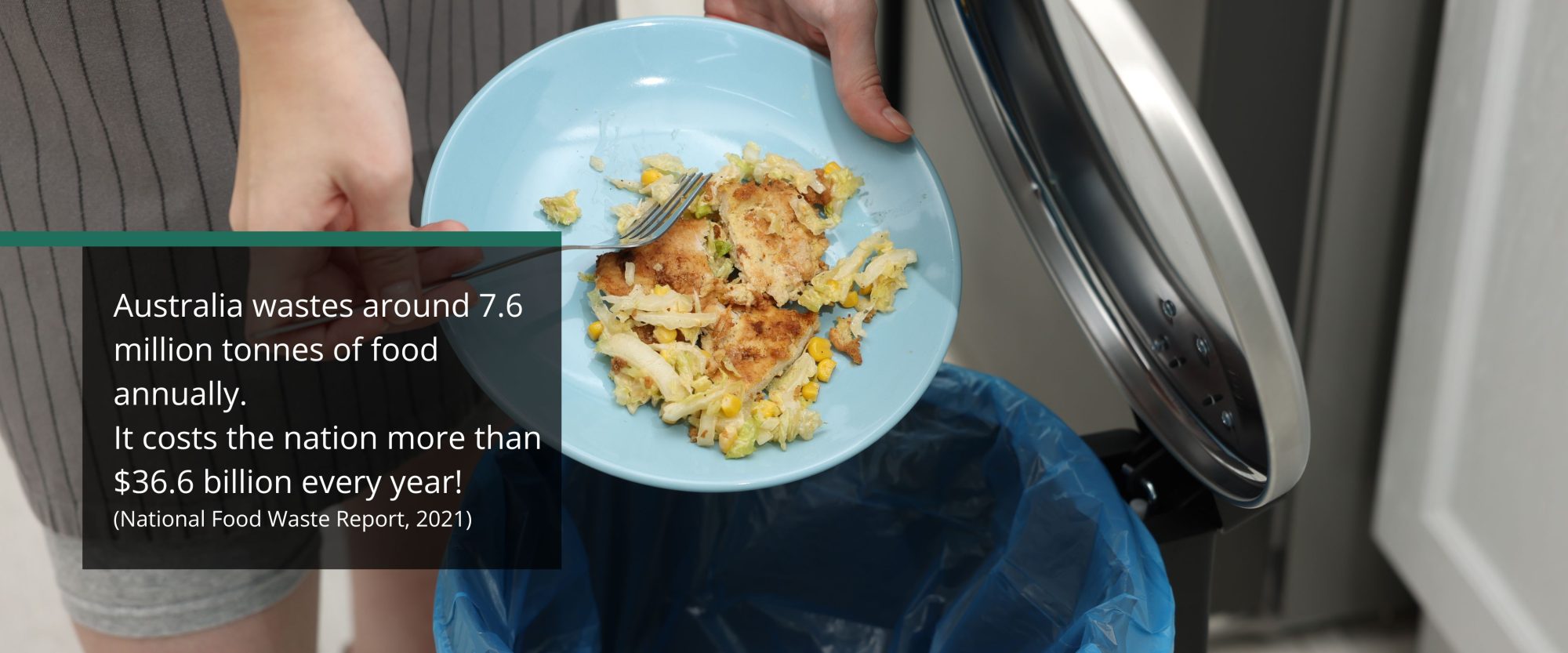
Organic waste in an oxygen-free environment becomes an all-you-can-eat buffer for anaerobic microorganisms—such as bacteria and archaea. As these microorganisms have the time of their lives consuming organic matter, they produce methane (reminder: that’s the super potent greenhouse gas we talked about earlier!). Of the 7.6 million tonnes of food Australia wastes each year, roughly 5 million tonnes ends up buried in landfill¹¹—out of sight, yes, but actively generating methane rather than harmlessly breaking down.
“Does paper in landfill cause the same problem?”
Yes, paper and cardboard can contribute to the same problem if not recycled. GHG emissions are primarily caused by the degradation of wet waste, which includes food waste and paper4. The problem occurs when the wet waste is covered in the landfill through waste accumulation, causing the oxygen-free environment that anaerobic microorganisms thrive in.
Key takeaway for households→ disposing of paper and food scraps in general waste has greater environmental consequences than many of us realise. Household composting, paper recycling and using Food Organics and Garden Organics (FOGO) bin services can make a difference!
Beyond the Bin: Lifecycle Emissions
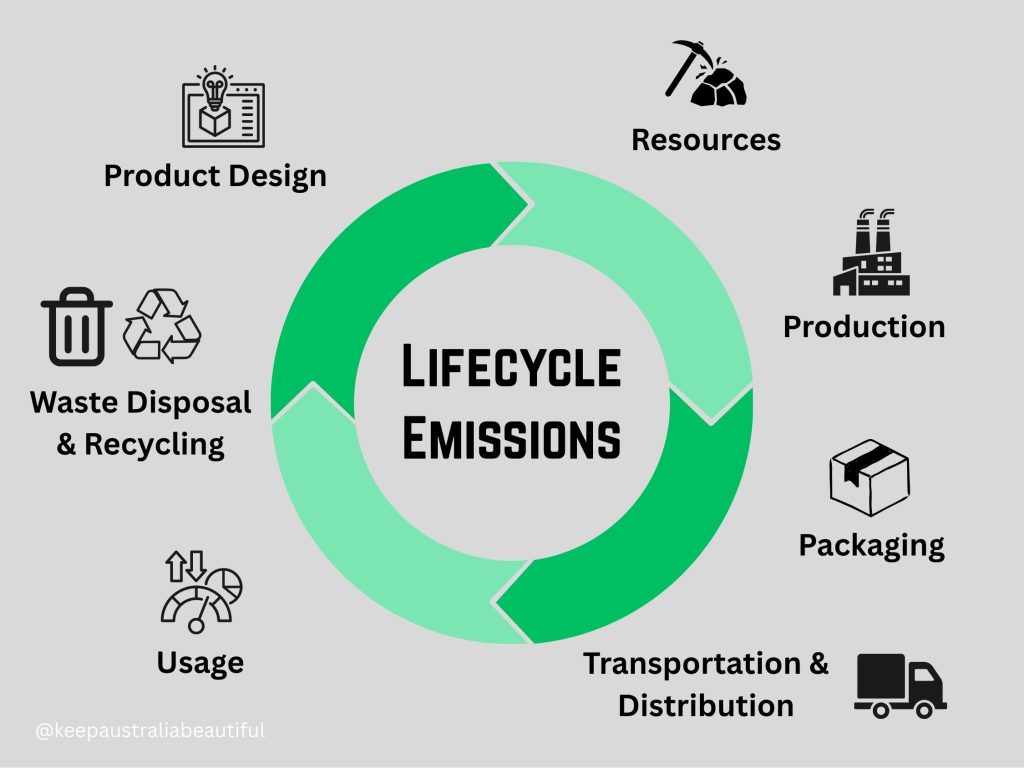
Landfill methane tells an important part of the story—but it’s only the end of it. To fully understand the climate impact of waste, we need to step back and look at lifecycle emissions: those generated during production, use, and disposal.
Life cycle thinking encourages us to look beyond the moment of use and consider the full journey of a product—from raw material extraction and manufacturing, through transport and consumption, to its final disposal or reuse. By taking this broader perspective, we can better understand the hidden environmental impacts embedded in everyday choices and identify opportunities to reduce waste, conserve resources, and lower emissions at every stage.
In other words, we’re not just thinking about waste — we’re considering the impacts of products from their conception to their final resting place (“from cradle to grave”).
We are thinking about the hidden emissions in everyday products. Take plastic, for example—a material embedded in daily life. Plastic production has reached unprecedented levels¹⁴. While many products carry a ‘recycle me’ label, in Australia only 14 per cent of plastic is kept out of landfill¹⁵. Recycling plastic is often inefficient and expensive, and demand for recycled material remains low. Yet policy and government plans continue to fall short of addressing the need to reduce plastic production and consumption in the first place. One study found that plastics used in Australia generated more than 16 million metric tonnes of GHG emissions in 2020, including emissions from production (often overseas) through to disposal¹⁶.
It can feel overwhelming—so where do we start?
For many of us, understanding each phase of a product’s life cycle starts with asking simple, practical questions at each stage.
- Where did this come from, and what resources or energy were used to make it?
- How far has it travelled, and how is it packaged?
- How long will I use it—and can it be repaired, reused, or shared?
- What happens when I’m done with it—can it be recycled, composted, or will it end up in landfill?
What Can Individuals Do?
Addressing climate change requires more than just awareness—it calls for action. The “waste problem” isn’t just about trash; it’s about consumption. Shifting our habits can feel confronting, but small, practical steps make a real difference:
✅ Reduce: Buy less, choose products with minimal packaging, and resist single-use items.
✅ Reuse: Repair, repurpose, or donate items instead of discarding them.
✅ Compost: Food scraps can become valuable soil, not landfill methane.
✅ Buy mindfully: Support brands that align with your sustainability values. Consider life cycle emissions (as above).
Wealthier countries tend to produce more waste per person, highlighting the connection between consumption and climate impact³. It is important to also highlight that the waste generated by developed states “often ends its journey inside the waste management facilities of developing states and, ultimately, their landfills”⁹.
But it’s not always simple to enact change. Awareness alone rarely leads to lasting change. Information can be overwhelming or inconsistent, and old habits die hard. That’s where social support and collective action matter: when sustainable choices are visible, normalised, and encouraged, they become easier to maintain.
Systematic Solutions: Beyond Individual Responsibility
While individual choices matter, they exist within systems that shape what is possible, affordable, and convenient. It’s difficult to reduce waste when products are overpackaged, repair options are limited, or sustainable alternatives are inaccessible or expensive—so responsibility cannot sit solely with individuals.
Systemic solutions focus on changing the structures around us: how products are designed, how materials are managed, and how waste is regulated. This includes policies that reduce single-use materials, investments in recycling and recovery infrastructure, and shifting responsibility upstream to producers through initiatives such as extended producer responsibility.
Importantly, systemic change reinforces individual action. When sustainable options become the default—through better design, clearer labelling, or supportive policies—behaviour change becomes easier and more consistent.
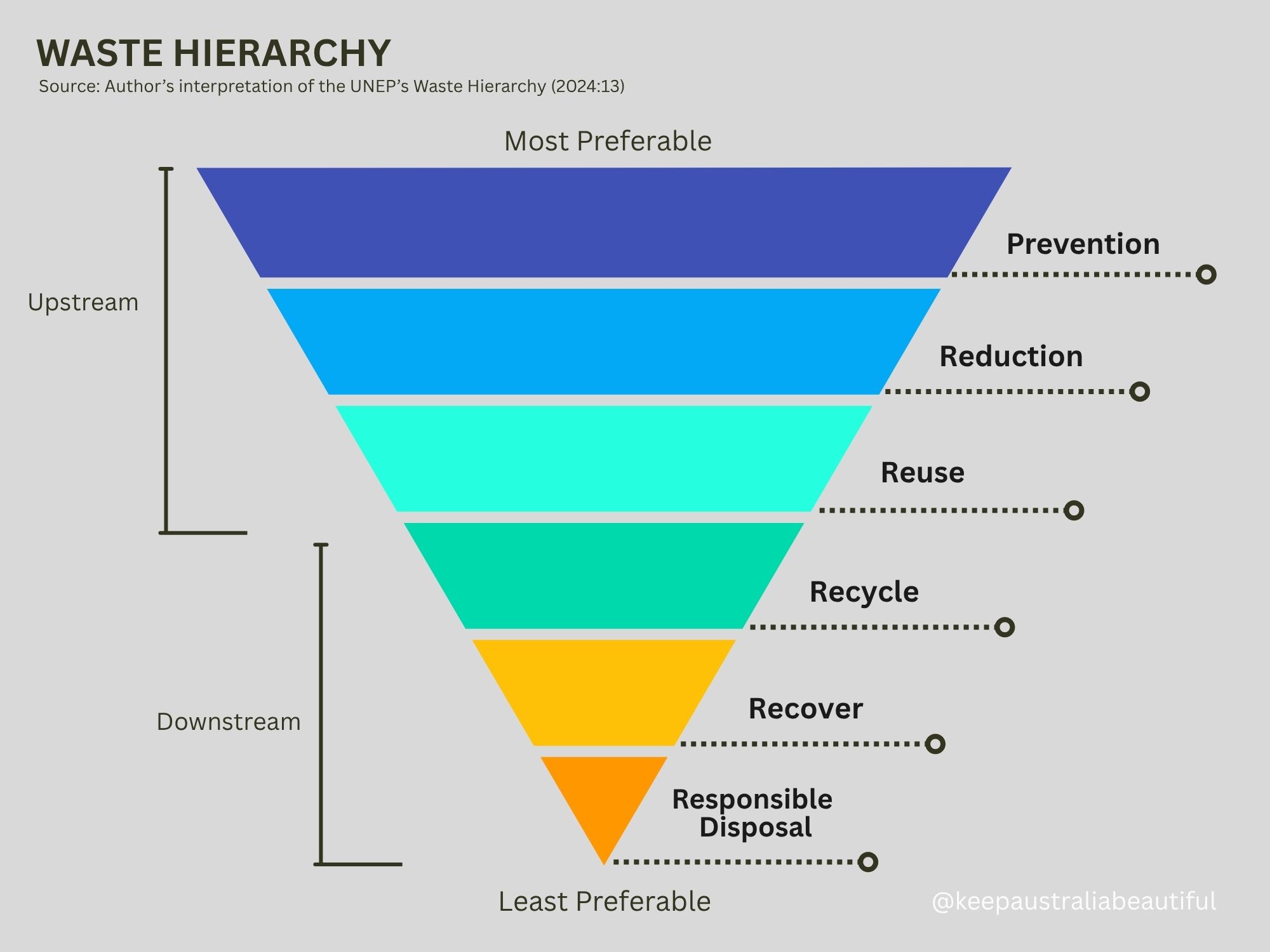
Addressing the waste–climate connection at scale requires both: individuals making conscious choices and systems that make those choices realistic. There is an urgent need to act at both ends—upstream and downstream—by reducing resource use and waste generation at the source, and minimising the environmental impacts of waste once it’s created³. The waste hierarchy (see below) sets out these priorities, from prevention through to responsible disposal.
What’s Happening in Australia?
In the National Waste Policy Action Plan (2024), the waste and recovery sectors are considered “important enablers of Australia’s transition to a circular economy”¹⁸. A circular economy is a production and consumption model designed to eliminate waste and pollution by keeping materials, products, and resources in use for as long as possible. The plan works towards an 80 per cent recovery target, and utilises the waste management hierarchy similar to the above UN hierarchy.
These are the current targets, all of which—if achieved—would have a significant impact on tackling climate change through the waste sector:
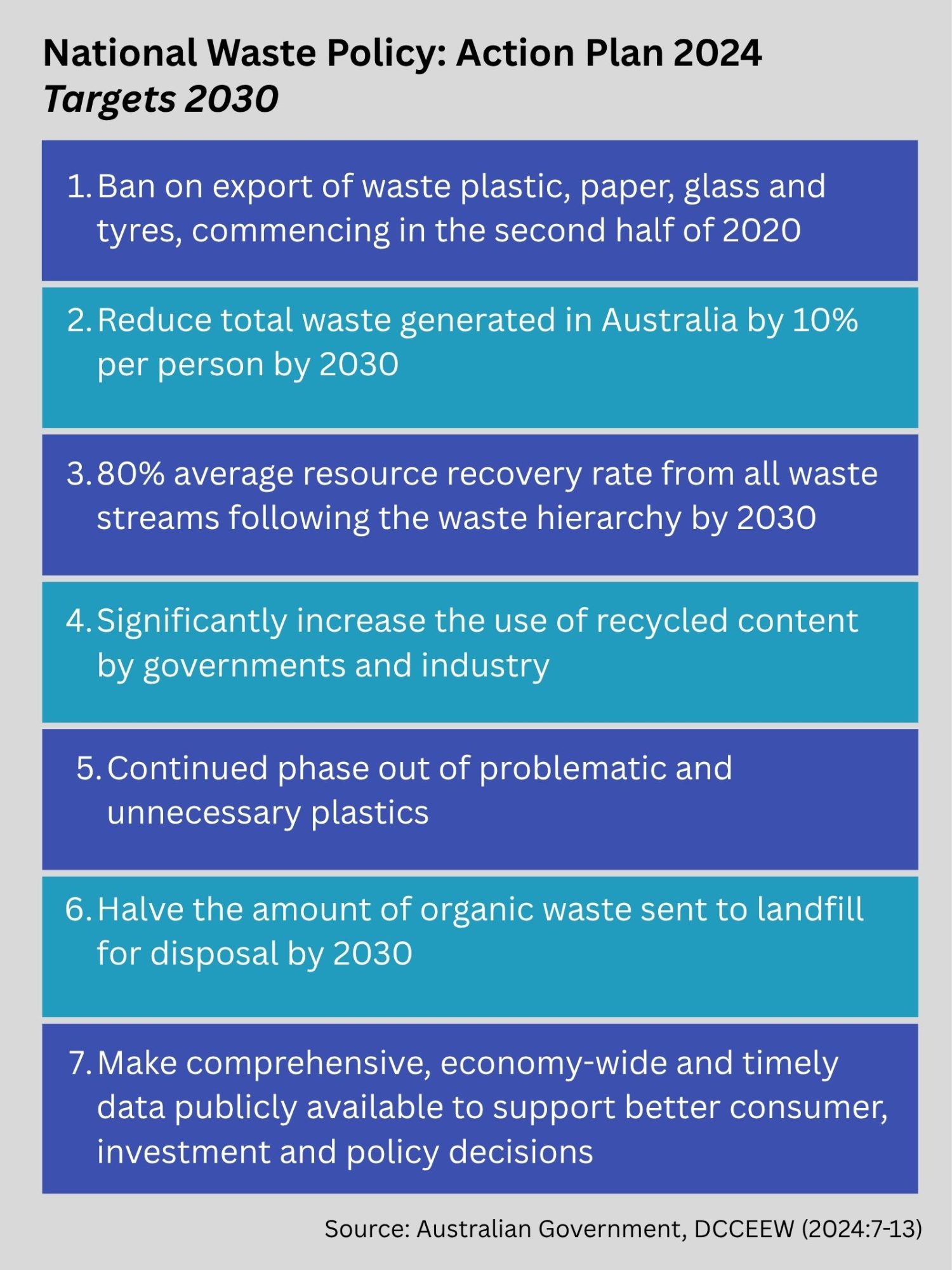
The plan acknowledges that changes must be made if Australia is to meet climate targets. Currently, we are falling short. If a circular economy is to be successfully realised, regions such as Australia, New Zealand, and North America will need to significantly reduce their levels of consumption³.
Reducing methane emissions is one of the fastest ways to slow global warming. And there are other benefits, such as human health and improved national economies. Cutting human-driven methane emissions is one of the most cost-effective ways to slow warming quickly and make a meaningful contribution to keeping global temperature rise within 1.5°C. Methane-focused actions could cut emissions by up to 45% this decade—preventing nearly 0.3°C of warming by the 2040s—while reinforcing long-term climate efforts¹.
– Department of Climate Change, Energy, the Environment and Water, (2022) National Waste Report
Corporate Responsibility and Product Design
The onus of responsibility is placed almost exclusively on consumers to make “mindful choices”, which fails to hold corporations and producers to the same level of accountability for the systems, supply chains, and product designs that drive waste and overconsumption in the first place.
There is a growing argument that both scientific discourse and policy frameworks often fail to fully acknowledge the scale of unsustainable consumption, along with a broader institutional reluctance to confront the need for significant lifestyle changes²⁰. Growing scientific literature suggests that while our lifestyles can be shaped voluntarily, they are also “influenced by structural and cultural forces”²⁰.
So, what role should brands play in reducing climate change?
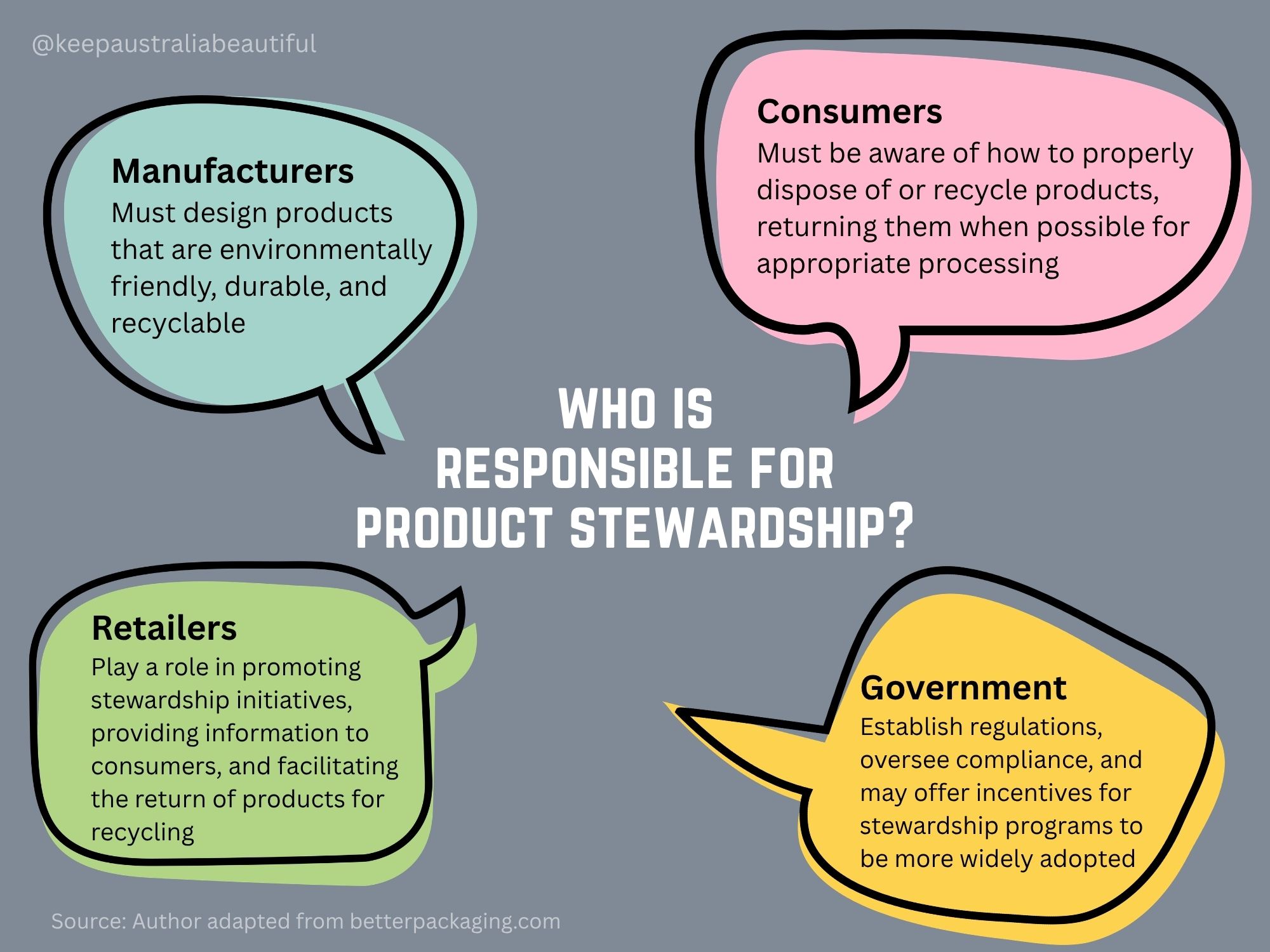
A crucial part to the move to a circular economy is product stewardship. This is a shared approach where everyone involved in a product’s lifecycle—designers, producers, sellers, and consumers—takes responsibility for reducing its environmental, health, and safety impacts. Brands need to consider: sustainable design, material selection, end-of-life management, consumer education and supply chain management²⁵.
The key takeaway from mounting research is that efforts should prioritise making climate-friendly behaviour the easiest choice—by ensuring prices accurately reflect carbon impacts, supporting products that can compete with less sustainable alternatives, and improving carbon labelling²¹. Consumers need clear, accessible information to support a shift toward more sustainable lifestyles—and it is the responsibility of brand owners and manufacturers to provide it.
Improvements and Innovations
Let’s have some good news now, shall we?
🍅In Food Waste… Australia’s reputation for food waste has not been stellar. However, the Australian Government worked with the states and territories to develop the National Food Waste Strategy—released in 2017 and aiming to reduce food waste by 50 per cent by 2030²². End Food Waste was established to deliver the plan, delivering campaigns, leading research and partnering with organisations across the food chain²³. Most states now impose levies on disposing of organic waste in landfills, making other methods such as bio-digestion and composting more cost-effective options for businesses⁴. Most major cities—and many smaller towns and communities—run food rescue initiatives that redirect edible surplus food to people who can use it, providing an important social benefit.
♻️In Recycling… The Recycling Modernisation Fund (RMF) is a national initiative designed to expand Australia’s capacity to sort, process and remanufacture key waste materials such as glass, plastic, tyres, paper and cardboard. By increasing domestic recycling infrastructure, it supports waste export regulations and helps drive the transition to a circular economy. Backed by over $200 million in federal funding—and $1 billion in total investment—the RMF is set to significantly boost Australia’s annual recycling capacity²⁴.♻️
🔍In Research… CSIRO is playing a key role in tackling waste and reducing greenhouse gas (GHG) emissions through research and innovation. Its work focuses on improving recycling systems, developing circular economy solutions, and finding ways to cut emissions across waste supply chains—particularly in areas like plastics, organics, and resource recovery. By partnering with government and industry, CSIRO helps translate scientific insights into practical strategies that reduce waste and lower Australia’s overall emissions footprint. Check out, for example, the Towards Net Zero Mission. Or Aspire—a digital platform developed by CSIRO that helps businesses find opportunities to reuse, repurpose, or exchange waste materials, reducing what is sent to landfill.
Why This Connection Is Overlooked
Traditionally, landfills have offered a convenient means to deal with waste. Despite global efforts to increase recycling, the waste sector is still not managing landfill greenhouse gas emissions at adequate levels.
The connection between climate change and waste generation/management is described in academic literature as the “Nearly Forgotten Nexus”⁴. Poor waste management and its climate change impacts are difficult to measure—leading to the issue being overlooked by governments¹⁷.
However, recent findings by the International Panel on Climate Change (IPCC) suggested that landfill greenhouse gas emissions may not be adequately accounted for, thereby hindering efforts to achieve net zero. The report warned that “unprecedented” changes must occur to slow or stop global warming⁴˒¹⁹.
“So, why don’t we hear more about the connection?”
We can be forgiven for not knowing more about the impacts of waste on global warming. There is a lack of accessible information on proper waste management practices available globally.
Here are some primary reasons why the link is often overlooked:
• Lack of Public Awareness: Education and information about waste and environmental impacts is not easily accessible.
• Focus on Recycling over Reduction: Public messaging has focused heavily on recycling, leading many to believe that sorting our rubbish is sufficient.
• The ‘Invisibility’ of GHG Emissions: Unlike emissions from car exhaust or a coal plant, GHGs are often invisible and occur over a long period of time.
• Complex and Indirect Causes: The connection is not linear. Waste contributes to climate change not just through disposal, but through the entire life cycle.
• Media and policy gaps: Global climate initiatives traditionally prioritise energy production and transportation, leaving waste management in the background.
And perhaps the numbers simply don’t alarm us enough. At a global scale, the waste management sector contributes a relatively small share of GHG emissions—around 3–5 per cent of total human-driven emissions. However, this figure understates its importance. The sector is uniquely placed to transition from a minor source of emissions to a major driver of emissions reductions. Although waste treatment and disposal generate emissions, preventing waste and recovering materials or energy can avoid emissions across the wider economy. In this way, a systems-based approach to waste management delivers climate benefits well beyond the sector itself, reducing emissions in energy, forestry, agriculture, mining, transport, and manufacturing.
Waste and its connection to climate change need widespread attention—now. Improving public knowledge on waste is a necessary step towards embracing collective responsibility.
– Department of Climate Change, Energy, the Environment and Water, (2024), National Waste Policy Action Plan
‘Contain Your Waste’: A Challenge!
At Keep Australia Beautiful, we continue to challenge ourselves (and you) to “do the right thing”. So for 1 week, we challenge you to choose an existing container from around the house—a jar, a tub, or a bucket and contain the amount of waste you produce that week to the capacity of your container.
The goal? To help us all rethink, reduce, and contain all the waste we produce to fit inside a container. So, let’s get thinking about reusables, avoiding single-use plastics, and getting creative about minimising waste at home and on the go.
This is something we do each year, in November. But you can do it whenever you want (hey, next week sounds good!).
Read more about it here 👉🏼 Contain Your Waste.
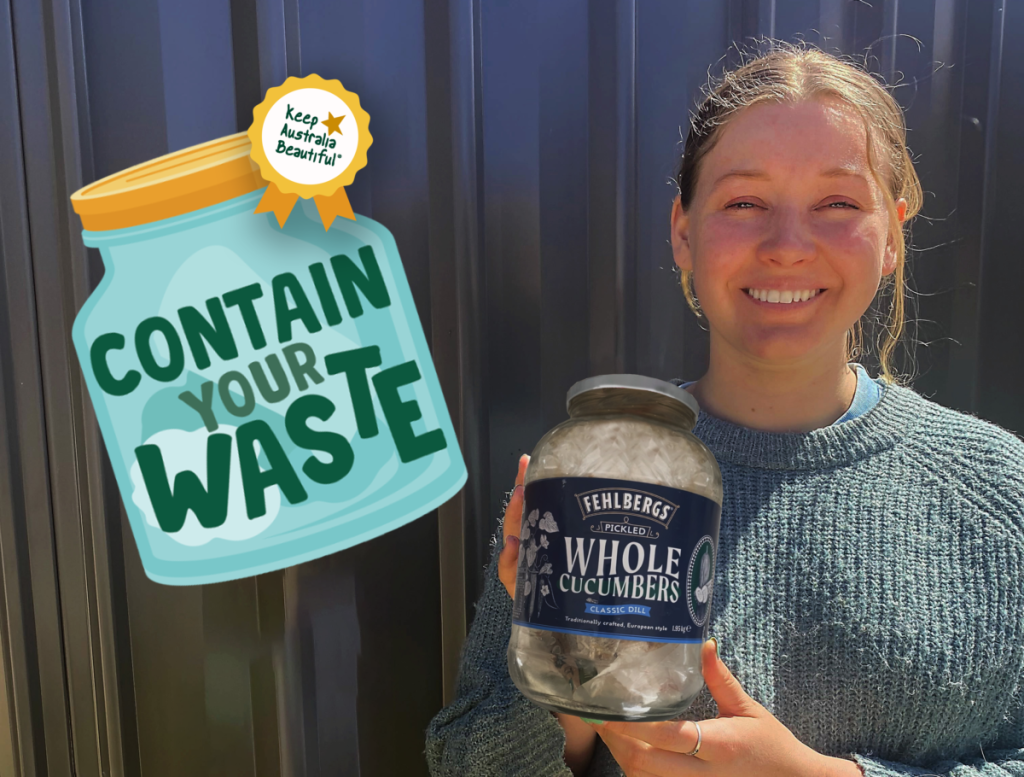
Rosie Starr, KAB Content Creator and Volunteer, showing us her successful Contain Your Waste Challenge.
Final Thoughts: Getting Out Of This Mess
In 2020, Australia generated more than 16 million tonnes of greenhouse gas (GHG) emissions from waste, spanning production through to disposal. While we have only scratched the surface of the problem, the direction forward is clear: meaningful change is needed at every level—from individual choices to government action and corporate responsibility.
It can feel daunting to face the prospect of a drastic lifestyle change. However, education on these urgent environmental issues is a vital—and ongoing—step towards real, meaningful change. To address the “mess” our planet is in, we must recognise our own role and agency, while also demanding that governments and corporations play their part.
Waste management—or mismanagement—is “a complex problem characterised by multi-layered interdependencies, compound social dynamics”³. It is also an urgent problem, one that requires swift actions towards a circular economy and a zero-waste approach.
We can all play a role. together—we all must if we are to tidy up this mess.
‼️Further Resources
Aspire, a digital platform developed by CSIRO that helps businesses find opportunities to reuse, repurpose, or exchange waste materials, reducing what is sent to landfill.
2018 National Waste Policy: Less waste, more resources
Keep Australia Beautiful’s Contain Your Waste Challenge
UNEP’s Global Methane Status Report
💚Further Resources—For the Kids!
NASA: “What are Greenhouse Gases?”
National Geographic Kids: What is Climate Change?
What to Do When Climate Change Scares You: A Kid’s Guide to Dealing with Climate Change Stress (What-To-Do Guides for Kids) – a book by Leslie Davenport
📝References
¹United Nations Environment Programme: Climate & Clean Air Coalition (2021), “Global Methane Assessment: Benefits and Costs of Mitigating Methane Emissions”. Retrieved from https://wedocs.unep.org/items/4d9774f8-1a9d-42d1-be2c-122408159b15
²Kazemian S, Zaman R, Foroughi B, Ghobakhloo M (2026), “Determining the carbon footprint of Australia’s electricity, gas, water and waste services sector”. Management of Environmental Quality: An International Journal, Vol. 37 No. 1 pp. 21–45, doi: https://doi-org.ezproxy-f.deakin.edu.au/10.1108/MEQ-07-2024-0311
³United Nations Environment Programme International Solid Waste Association (2024), “Global Waste Management Outlook 2024: Beyond an Age of Waste – Turning Rubbish into a Resource”. Retrieved from https://wedocs.unep.org/handle/20.500.11822/44939
⁴Blair J and Mataraarachchi S (2021,) “A Review of Landfills, Waste and the Nearly Forgotten Nexus with Climate Change”. Environments, 8(73), 1-25, https://doi.org/10.3390/environments8080073
⁵Zhang M, Ionkova K, Boukerche S (2025), How the World Bank is tackling the growing global waste crisis, World Bank, accessed 20 March 2026
⁶Australian Government, Department of Climate Change, Energy, the Environment and Water (2025), Waste generation and prevention, Australian Government, accessed 1 April 2026
⁷Environment Protection Authority Victoria (n.d.), Household waste and landfill, EPA, accessed 1 April 2026
⁸Australian Government, Department of Climate Change, Energy, the Environment and Water (2018), (2022), National Waste Report 2022, accessed 1 April 2026
⁹Schaer, J B (2024), This Paper Is Trash: Problems in International Waste Mismanagement. George Washington International Law Review, 55(1), 125–174
¹⁰United Nations Environment Programme (2025), Global Methane Status Report, accessed on 3 April 2026
¹¹Australian Government, Department of Climate Change, Energy, the Environment and Water (2025), Reducing Australia’s food waste, accessed 3 April 2026
¹²Environment Protection Authority, South Australia (2019), Landfill gas – methane, accessed 4 April 2026
¹³Gregson N (2023) The Waste of the World: Consumption, Economies and the Making of the Global Waste Problem, Bristol University Press
¹⁴Leal Filho W, Barbir J, Carpio-Vallejo E, Dobri A, Voronova A (2025), Decarbonising the plastic industry: A review of carbon emissions in the lifecycle of plastics production, Science of The Total Environment, 999, https://doi.org/10.1016/j.scitotenv.2025.180337
¹⁵Anderson L, Gbor N (2024), Plastic waste in Australia: And the recycling greenwash, accessed 4 April 2026
¹⁶WWF Australia (2023), Plastic Waste and Global Heating – What’s the Connection? accessed 4 April 2026
¹⁷WasteAid, Climate Change, accessed 1 April 2026
¹⁸Australian Government, Department of Climate Change, Energy, the Environment and Water (2024), National Waste Policy Action Plan, accessed 6 April 2026
¹⁹The Intergovernmental Panel on Climate Change (IPCC) (2018) Global Warming of 1.5, accessed 7 April 2026
²⁰Bostrom M, Callmer A. (2025). Why and how lifestyle change to reduced consumption is an active part of the emerging sustainability transformation. CURRENT SOCIOLOGY. https://doi.org/10.1177/00113921251381810
²¹Thøgersen J (2021). Consumer behavior and climate change: Consumers need considerable assistance. Current Opinion in Behavioral Sciences, 42, 9–14. https://doi.org/10.1016/j.cobeha.2021.02.008
²²Commonwealth of Australia (2017). National Food Waste Strategy: Halving Australia’s Food Waste by 2030, accessed 11 April 2026
²³Australian Government, Department of Climate Change, Energy, the Environment and Water (2026), End Food Waste Australia, accessed 11 April 2026
²⁴Australian Government, Department of Climate Change, Energy, the Environment and Water (2026), Investing in Australia’s waste and recycling infrastructure, accessed 3 April 2026
²⁵Better Packaging (n.d.) The role of product stewardship in environmental responsibility, accessed 5 April 2026
Related Posts